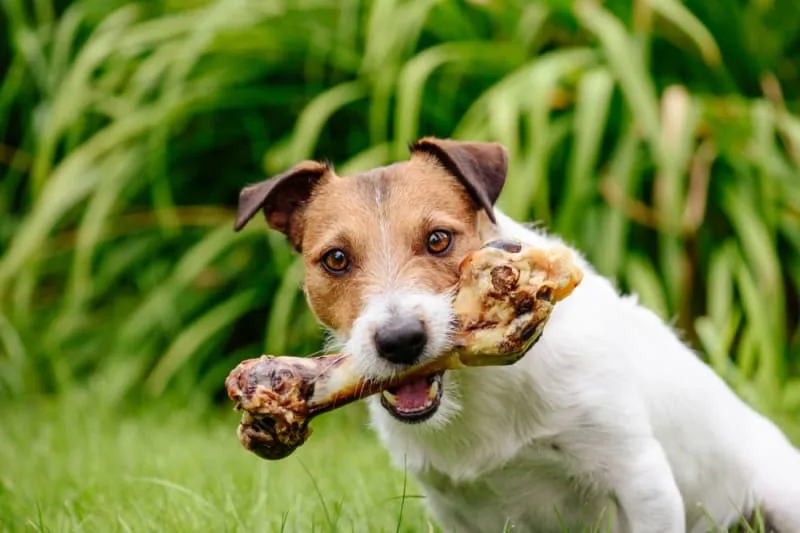
Bones can be an enriching treat for your dog. Chewing can relieve boredom, anxiety and stress, and helps keep your dog's teeth clean. However, bones can be also harmful to dogs. Knowing that, what bones can dogs eat? Today, our Pflugerville vets explain the kinds of bones that are safe and unsafe for dogs.
Are bones good for dogs?
Usually, the answer is yes. In addition to providing minerals and other nutrients, bones satiate your dog's hunger. Chewing also helps to prevent gum disease and plaque buildup by stimulating salivary enzymes. Furthermore, a dog that is chewing on a bone is less likely to lick or scratch his paws excessively.
So can I give a dog a bone?
A better question to ask is, "Should dogs chew bones?"
In general, raw bones tend to be better for dogs than cooked bones. So if you’ve ever used your favorite search engine to ask, "Are cooked bones bad for dogs?" the answer is yes, but again, in general.
This is because cooked bones can lead to injuries or even death if your dog gets splinters in their mouth or digestive tract from cooked bones (cooked bones tend to cause this more frequently, but it is also possible with raw bones). A dog that chews on cooked bones may experience the following effects:
Lacerations or punctures to the gums and tongue
Cuts and wounds to the throat
Damaged or broken teeth
Choking
Vomiting
Diarrhea
Severe constipation
Intestinal blockage
Perforation of the intestines
Rectal trauma and bleeding
What bones are not safe for dogs?
Cooked Chicken & Turkey Bones: These bones are most likely to splinter. Small bones are also more prone to getting lodged in the throat and esophagus than larger, more solid bones.
T-Bones: T-bones, due to their shape, can become stuck in a dog's throat on one end while the other end is down the esophagus or trachea. This can lead to severe swelling that can block the airway, preventing your dog from breathing.
Small Bones & Circular Bones: It's dangerous to give your dog any bone that splinters easily or is smaller than your dog's mouth. These may lead to oral and gastrointestinal injuries, not to mention the choking hazards. The fact that circular bones can become lodged in a dog's lower jaw makes them undesirable as well. Dogs typically require sedation if the bone needs to be cut in order to release their jaw.
What bones can dogs eat?
Generally, you want to get raw bones from a reputable butcher large enough to be easily grasped and about the size of your dog's head. It should also have bulges or lumps on both ends.
Though there are still risks, raw bones are regarded as a "safe" bone option. There's still a chance that your dog will get a bone splinter, cut gums, or break a tooth, though. Constipation can also result from overindulging in bone chewing. We recommend chilling a bone before giving it to your dog.. You should also throw it out a few days later.
General Rules for Bone Safety
If you are considering giving your dog a bone, here are some general safety rules to follow:
Do:
Do Not:
Are you still wondering what kinds of bones are safe for your dog to chew? Contact our Pflugerville vets today and we'd be happy to answer any questions you have.